
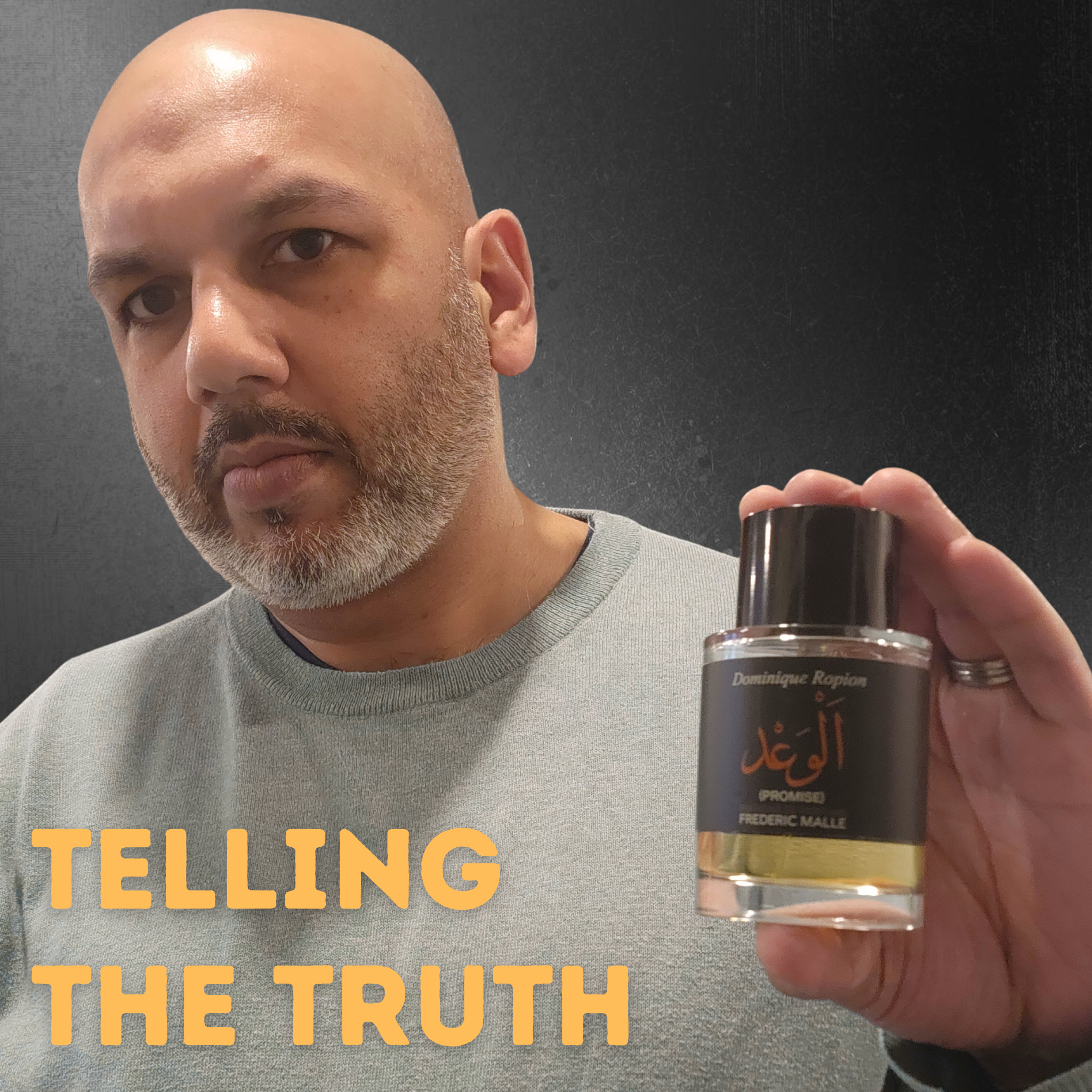
A fragrance journalist with 20 years of professional experience in media and communications explains why independence is not a sacrifice
I remember smelling fragrances before I remember almost anything else.
The drift of my mother’s Chanel No. 5 reaching the back seat on long drives from our small Illinois town into Chicago for religious gatherings. The specific brightness of Davidoff Cool Water the first time I smelled it as a teenager in a suburban mall. Armani Acqua di Gio, Bvlgari Black, Claiborne Curve, Ralph Lauren Polo Sport, Yves Saint Laurent Opium. These were not purchases. They were the scaffolding on which a particular kind of attention was being built in me long before I had the vocabulary for what was happening.
Around the same time I was becoming a journalist. I was 16, writing professionally for my town newspaper, the Daily Journal in Kankakee, earning ten cents a word, a time when people still read local news. What I learned in that newsroom had nothing to do with money. It had everything to do with the editor who rewrote my leads until they said what I had meant to say all along, and the sources who trusted a teenage reporter with something difficult and expected only honesty in return. Journalism was a service. The byline was just a receipt, not a bragging right.
Two formations at once. Fragrance taught me that beauty is worth the care involved to do it properly. Journalism taught me that the truth is worth the cost of telling it. I would not understand for decades that these were the same lesson.
𝐖𝐡𝐚𝐭 𝐣𝐨𝐮𝐫𝐧𝐚𝐥𝐢𝐬𝐦 𝐭𝐚𝐮𝐠𝐡𝐭 𝐦𝐞
Ten years as a journalist taught me that the independence principle is not a rule imposed from outside. It is the logical consequence of the public service foundation. The moment another loyalty competes with the reader’s right to honest information, the journalism is compromised. That is not a high-minded preference of mine, it is a mechanical fact.
I took my independence seriously enough that for years I chose not to vote — not because I had no opinions, but because I believed casting a ballot would compromise my ability to cover politics without bias. The independence principle, when taken seriously rather than treated as a slogan, asks real things of you. I was willing to pay them.
When fragrances pulled me back into serious writing near the end of 2023, I brought that principle with me. The first time I sat down to write about a bottle I genuinely loved and realised how little of what I was reading online could be trusted, something in me recognised the problem immediately. It was the same problem, wearing different clothes.
𝐖𝐡𝐚𝐭 𝐜𝐨𝐦𝐦𝐮𝐧𝐢𝐜𝐚𝐭𝐢𝐨𝐧𝐬 𝐭𝐚𝐮𝐠𝐡𝐭 𝐦𝐞
Between journalism and fragrance writing I spent 10 years on the other side. Corporate communications and marketing for Ford, TD Bank and Black & McDonald put me inside the rooms where brands decide how they want to be seen by the public. Brands have legitimate interests in how they are portrayed. That is not corruption, but it is also definitely not journalism.
When a brand sends a creator a gifted bottle, invites them on a press trip or offers an exclusive in exchange for coverage, I know exactly what is happening because I spent a decade supporting the strategic thinking behind arrangements just like those. I am not cynical about this, but I am informed. And that knowledge comes with an obligation — to give the subject an angle that most fragrance content never bothers to pay.
𝐖𝐡𝐚𝐭 𝐟𝐫𝐚𝐠𝐫𝐚𝐧𝐜𝐞 𝐣𝐨𝐮𝐫𝐧𝐚𝐥𝐢𝐬𝐦 𝐚𝐜𝐭𝐮𝐚𝐥𝐥𝐲 𝐫𝐞𝐪𝐮𝐢𝐫𝐞𝐬
Spraying a fragrance once and immediately passing judgment is not a review. It is a first impression dressed up as a verdict. Platform economics reward volume and speed, and producing serious fragrance content at scale is genuinely incompatible with wearing each fragrance for days before writing a word.
But fragrance deserves better. The compositions we wear are the result of decades of perfumery, years of development, and ingredients that travelled on camels and horses for centuries along trade routes before arriving in the bottle on our dressers. Dismissing a fragrance after thirty seconds of contact is a failure to meet the work at the level it lives.
My most recent review, of Amouage Opus XIV Royal Tobacco, required days of wearing, research spanning Armenian trade history, Omani frankincense culture and one perfumer’s specific biography and multiple drafts before a word was published. Each wearing revealed something the previous one had not.
To write, I also buy my own bottles the vast majority of the time. When I receive product for consideration, I disclose it and my assessment remains my own, because the reader’s trust is the only currency this work runs on.
𝐖𝐡𝐲 𝐈 𝐰𝐫𝐢𝐭𝐞 𝐥𝐨𝐧𝐠 𝐚𝐧𝐝 𝐰𝐡𝐲 𝐈 𝐰𝐫𝐢𝐭𝐞 𝐚𝐭 𝐚𝐥𝐥
Reach is the influencer’s metric. Service is the journalist’s metric. Written journalism is appearance blind, unlike popular video. This has consequences. I have watched genuinely talented women in the fragrance space generate far lower engagement than creators whose primary appeal is visual, their knowledge invisible to an algorithm that cannot read. AI has the same blindness in reverse: it sees only what has already been written and optimises for the centre of it, producing polished prose that carries no human fingerprints, pieces that cover all expected points without saying anything unexpected.
I wanted to write the kind of review that lands through the specific intensely personal memory of a Pakistani-American Muslim journalist who grew up smelling his mother’s spices in an Illinois kitchen, lived in five countries while pursuing multiple degrees and work, and finally decided to connect fragrances with 20 years of media and comms work. I wanted to join an organization with that degree of specificity and personal insight which AI can only hope to mimic.
I looked for a fragrance publication that was independent, intellectually serious and committed to beautiful writing about something I loved deeply, from my perspective. When I could not find one to join, I built one.
That is either admirable determination or a spectacular failure of self-awareness. Possibly both.
𝐖𝐡𝐚𝐭 𝐭𝐡𝐞 𝐟𝐫𝐚𝐠𝐫𝐚𝐧𝐜𝐞 𝐰𝐨𝐫𝐥𝐝 𝐝𝐞𝐬𝐞𝐫𝐯𝐞𝐬
There are stories in this industry not being told with the seriousness they deserve.
The reformulation crisis: brands have quietly degraded compositions that serious collectors spent years and real money learning to love, while maintaining public silence about what changed and why. I have bought expensive bottles on the strength of trusted reviews, paid a significant premium, and opened them to find something noticeably diminished. That is a breach of the implicit agreement between a luxury brand and the people who take it seriously.
The tariff and blockade situation: like most enthusiasts, I hunt for the best deals I can find, but now current disruptions are raising prices and constraining supply in ways that land directly on the shelf in front of you.
And the Muslim fragrance consumer market: this might be the most under-covered story in this space. The global halal cosmetics market currently stands at roughly $53 billion, with fragrance among its fastest-growing segments. More than a billion people, at least one out of every five humans. A tradition in which fragrance is not decoration but devotion, stretching back fourteen centuries. This angle is almost entirely absent from English-language fragrance journalism.
I want to change that because it is my perspective too. I am proud of my faith and my culture. When I write about oud, about incense, about the richness of Middle Eastern perfumery, I am not covering an exotic niche for a Western audience. I am writing about something that belongs to me.
I became a journalist because I believed information in the right hands at the right time changes things. I became a fragrance journalist because fragrance is worth the level of care that most fragrance content refuses to give it. The subjects are different. The principle is the same.
The byline is still just the receipt. Somewhere there is a reader in a back seat, a particular smell reaching them before they have words for what it is doing to them. I write for that person. I intend to keep trying to be worthy of the attention they don’t yet know they’re paying.
𝘈𝘭𝘪 𝘉𝘰𝘬𝘩𝘢𝘳𝘪 𝘪𝘴 𝘢 𝘧𝘳𝘢𝘨𝘳𝘢𝘯𝘤𝘦 𝘫𝘰𝘶𝘳𝘯𝘢𝘭𝘪𝘴𝘵 𝘢𝘯𝘥 𝘵𝘩𝘦 𝘧𝘰𝘶𝘯𝘥𝘦𝘳 𝘰𝘧 𝘈𝘭𝘪 𝘗𝘦𝘳𝘧𝘶𝘮𝘦𝘸𝘢𝘭𝘢.

