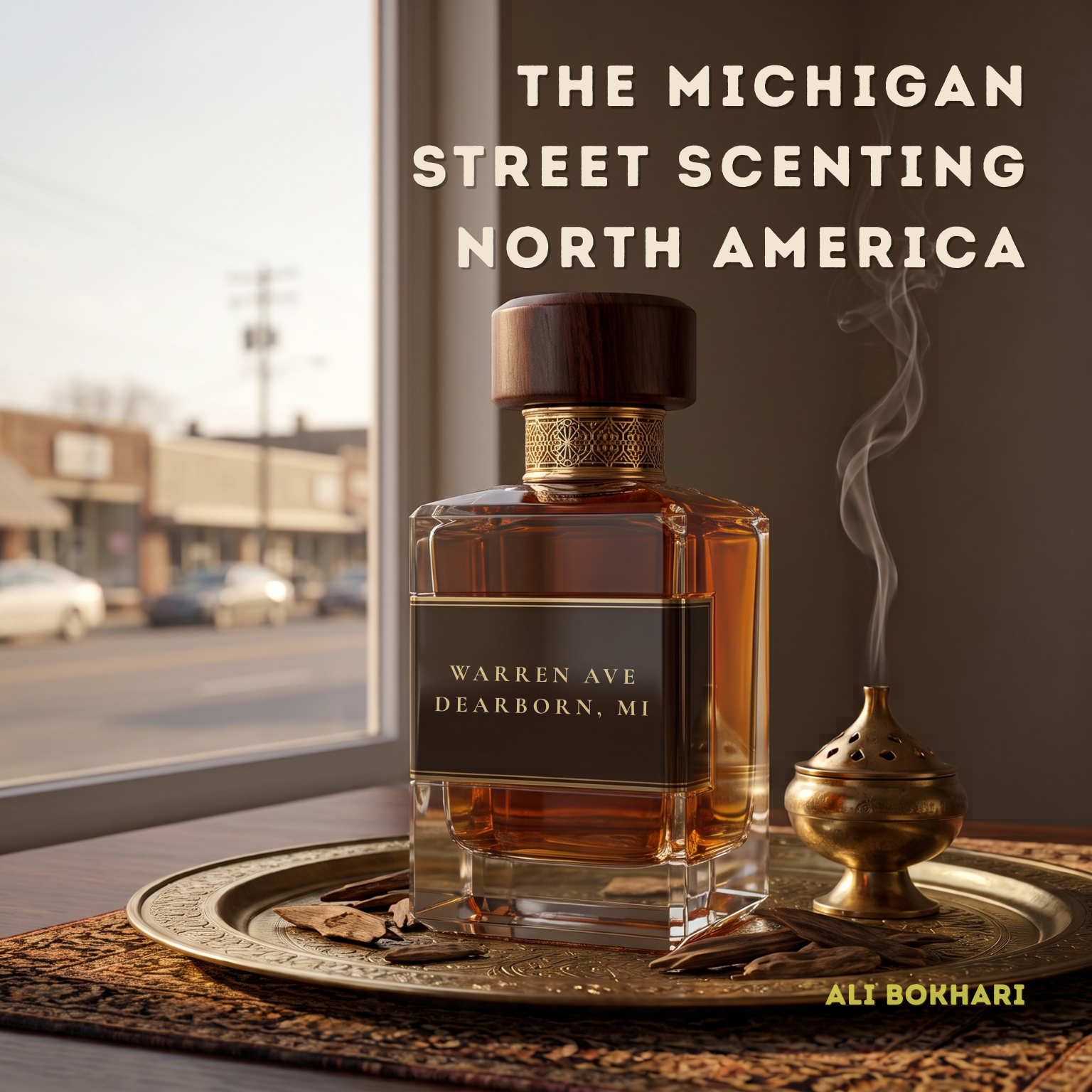
Seven Arabian-style fragrance shops sit within three miles of one another in Dearborn, MI, America’s first Arab-majority city.
Zajil Abuhamra was nine years old in Buffalo, in the US state of New York, when he asked his mother why the family could not burn bakhoor every day.
“We can’t,” she told him. “It’s only for the guests when they come over. Because if we run out, then we have to wait till someone comes from Yemen to bring back the bakhoor with them.”
Bakhoor is burned when guests arrive, not when a person wishes to smell pleasant, and a household exhausts it the way it exhausts coffee. It is ubiquitous in the Middle East, but until fairly recently it was relatively unknown in North America. Today, Abuhamra’s store is one of seven Middle Eastern fragrance shops I counted within a three-mile stretch of Dearborn, Michigan, running from Wyoming Avenue to West Warren Ave.
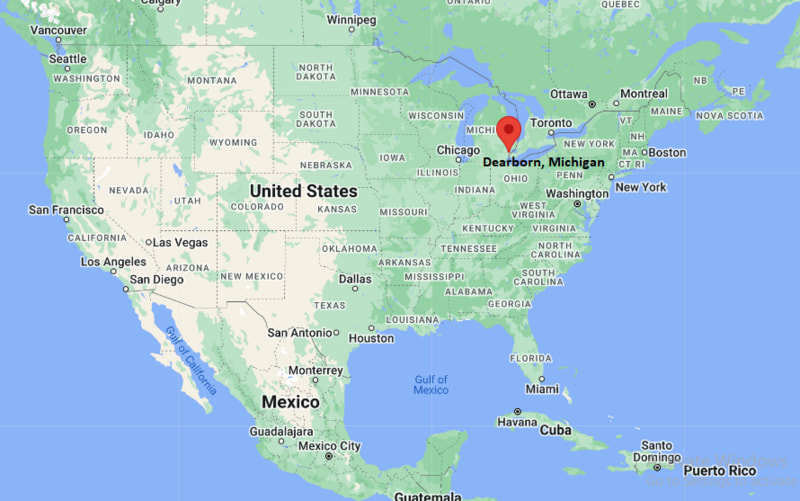
While I was driving from Toronto to Chicago I had stopped in Dearborn for some delicious halal Arabic food, a clean washroom and a place to pray. I lived in this city in 2007, and again from 2012 to 2013, and I have no memory of a single fragrance store on that stretch, though I should be honest about what that is worth: I was not writing about perfume then, and a shop I had no reason to notice is a shop I would not have noticed. What I noticed this time was that the fragrance scene here was a story that needed to be told.
Why Dearborn has so many fragrance stores has an obvious explanation. Dearborn is the first Arab-majority city in the United States, according to the 2020 US census, the first to count Middle Eastern and North African (MENA) ancestry as a category of its own rather than folding it into white. Exactly how large that majority is depends on which report you read: figures in circulation run from about 51% to 54.5%, a gap that likely turns on whether the count includes only those reporting MENA ancestry alone or also those reporting it in combination with another, though I have not been able to confirm which measure each outlet used. The Detroit News, reporting the release, put the number at more than 56,000 of the city’s roughly 110,000 residents, with over 22,000 claiming at least partial Lebanese heritage, more than 14,500 Yemeni, just under 9,500 identifying simply as Arab and nearly 5,000 Iraqi. Matthew Jaber Stiffler, director of the Center for Arab Narratives at the Arab American National Museum in Dearborn, has said the true share is probably closer to 70%, reasoning from enrolment figures in the city’s public schools.
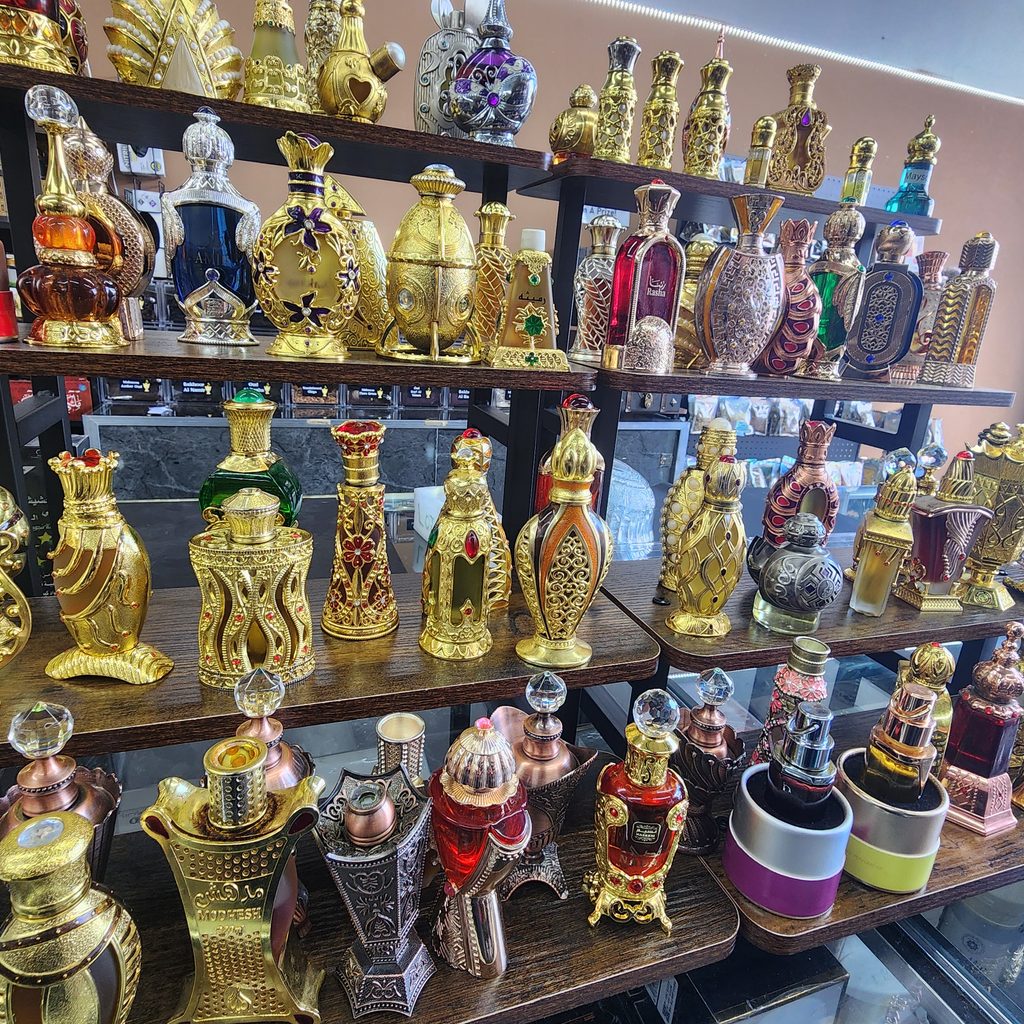
Fragrance for Arabs is not just a hobby; it is serious business too, and in the Middle East it is inescapable. Oud, musk and bakhoor belong nearer to hospitality than to cosmetics. Seven shops in three miles is what supply looks like when demand is concentrated, but if you think they are all the same you’d be wrong. They each target a specific clientele that goes far beyond Dearborn.
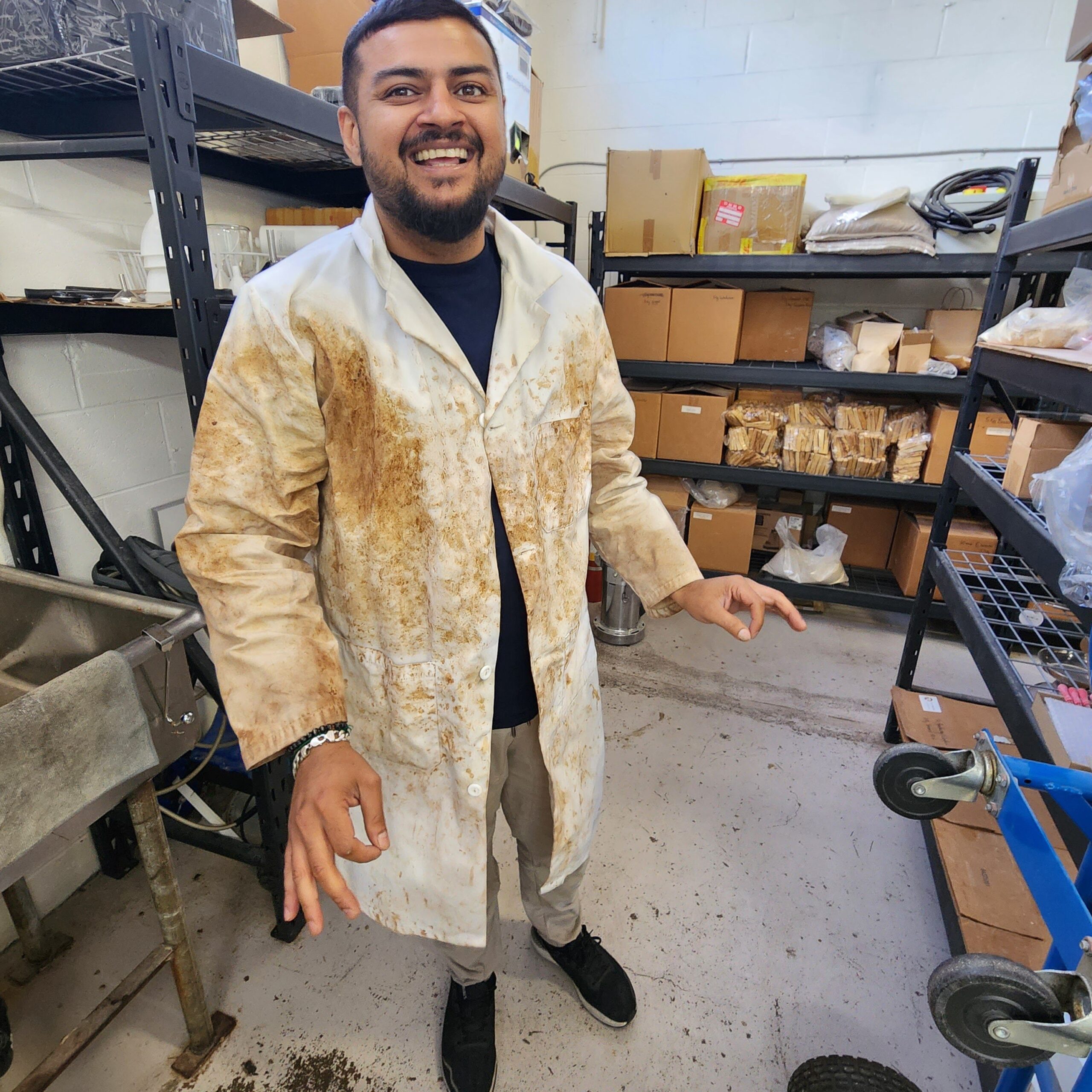
Two decades separated Abuhamra’s question from his shop. He saw stores in Dubai given over to bakhoor and attars while getting married there in 2010, and he was inspired to do the same in North America. He imported his first shipment in 2012, and sold it from the counter of his father’s takeout restaurant. On the first day Abuhamra outsold the restaurant, he says.
After a long stall in momentum Abuhamra had a family emergency. His one-year-old daughter had a seizure in a Walmart parking lot while he was elsewhere. She recovered from the experience. He did not. “How am I born in the USA and educated, yet my daughter could have died and I wouldn’t know how to save her life?” he asked himself.
He enrolled in nursing school in 2016. He did not abandon medicine for perfume. He took up medicine to pay for perfume, a dependable salary and predictable days off being what a man with three children and a warehouse ambition requires.
He allowed himself 10 years to launch. He opened in five.
What the lockdown started
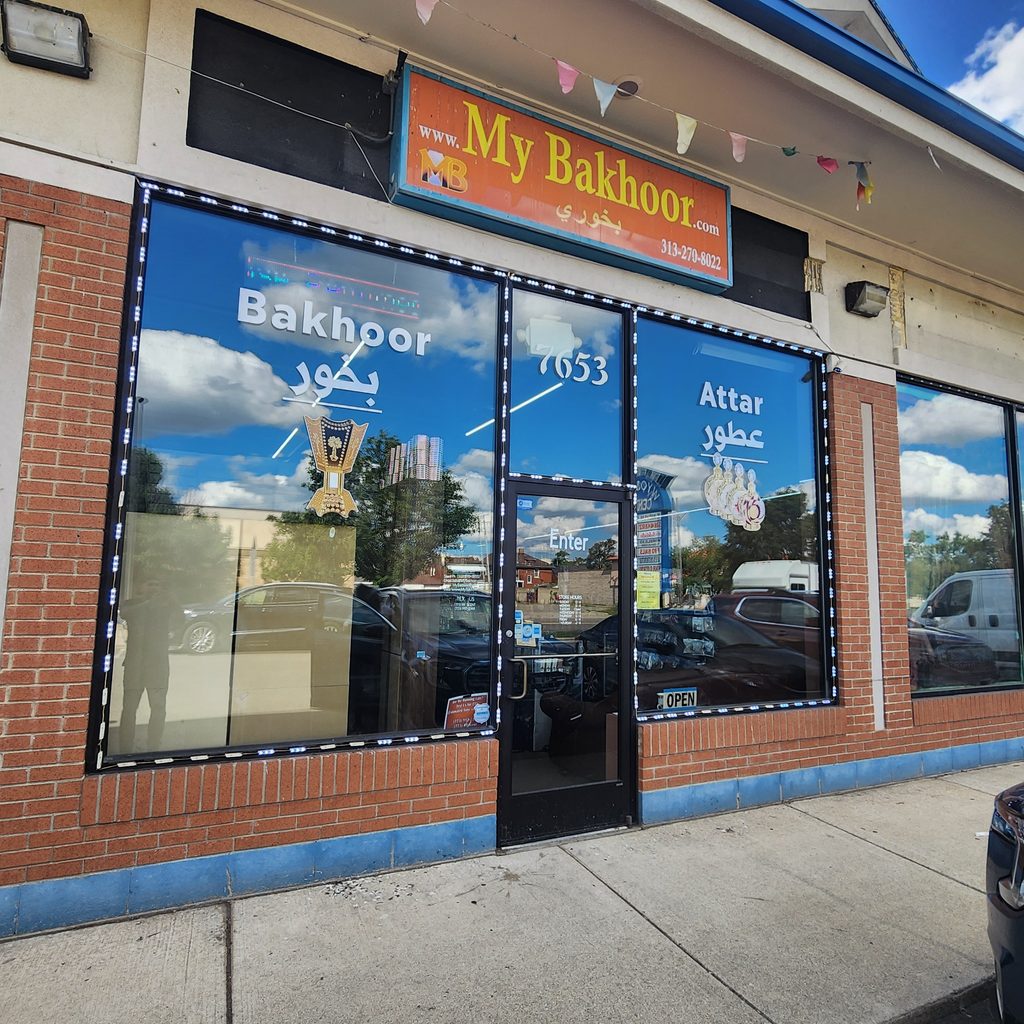
Like several others in Dearborn, Abuhamra’s fragrance store My Bakhoor & Perfumes opened in 2021 into a market the pandemic had just remade. Confined indoors with time and no way to spend it, a great many people discovered fragrance at once: a small pleasure that arrives in the mail, rewards attention and furnishes something to discuss with strangers online at a moment when strangers online were most of the available society.
In Dearborn, a city where oud and bakhoor were already part of receiving a guest, the ground was fertile for an explosion in Arabian fragrance retail. Abuhamra saw those people who had discovered fragrance as consumers begin selling it as merchants, largely by reselling other companies’ bottles.
“Everyone started getting the same inventory and the supply became more than the demand. It was a race to the bottom,” he opined. “I saw people racing for the cheapest prices to get a customer through the door. I refused to play that game.”
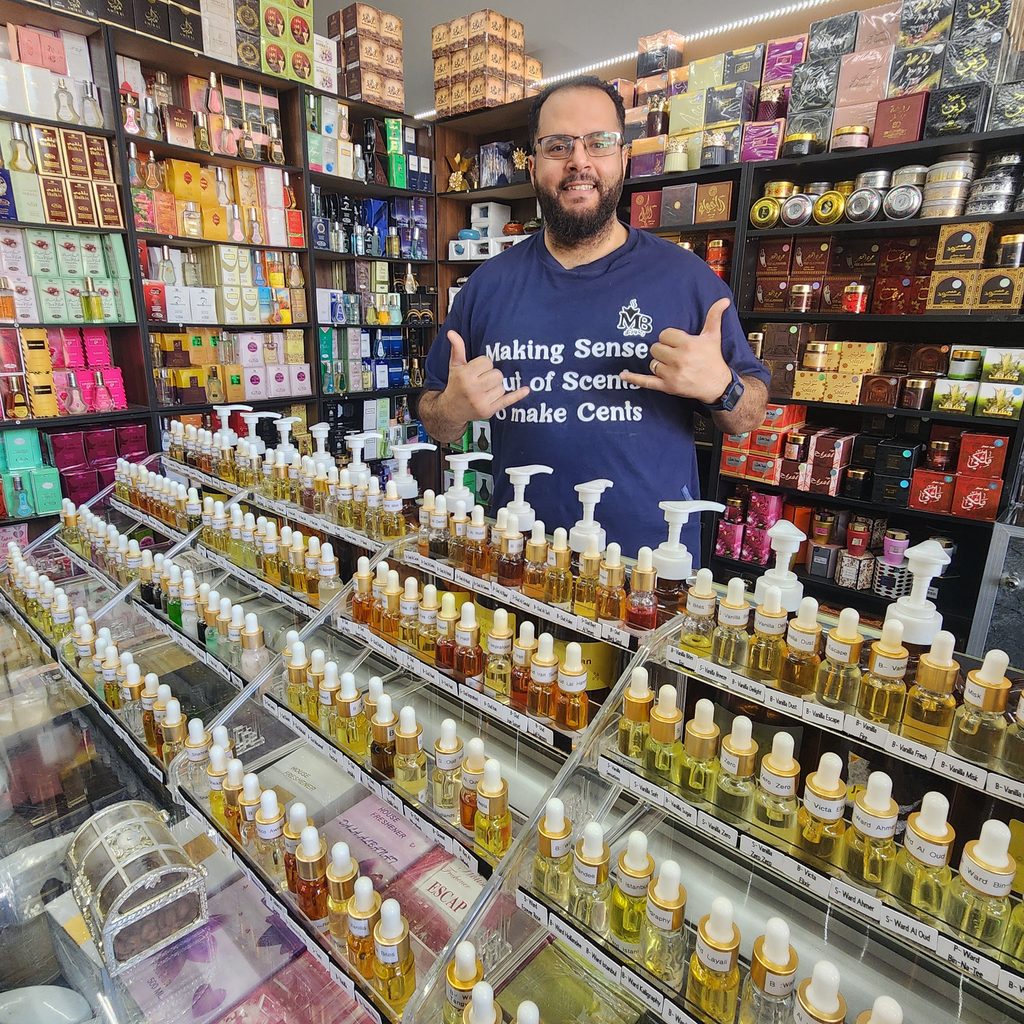
Many of those businesses did not survive the price war they had started, though that account comes from a competitor who did, and the shops that closed were not available to describe to me what happened to them. However, I quickly gathered that each store in the area largely focused on a customer base not served by the other shops, and all appeared to focus on providing value rather than bargain basement pricing.
Abuhamra decided the only defensible position was one nobody else could occupy. So he stopped selling other companies’ fragrances and began selling both his own ready made fragrances as well as the act of customers making their own blends. The oils came from the world over, including private label made to his specification in Dubai and Saudi Arabia, some blended in-store from purchased oils in combinations of two components to 17, and some composed from scratch.
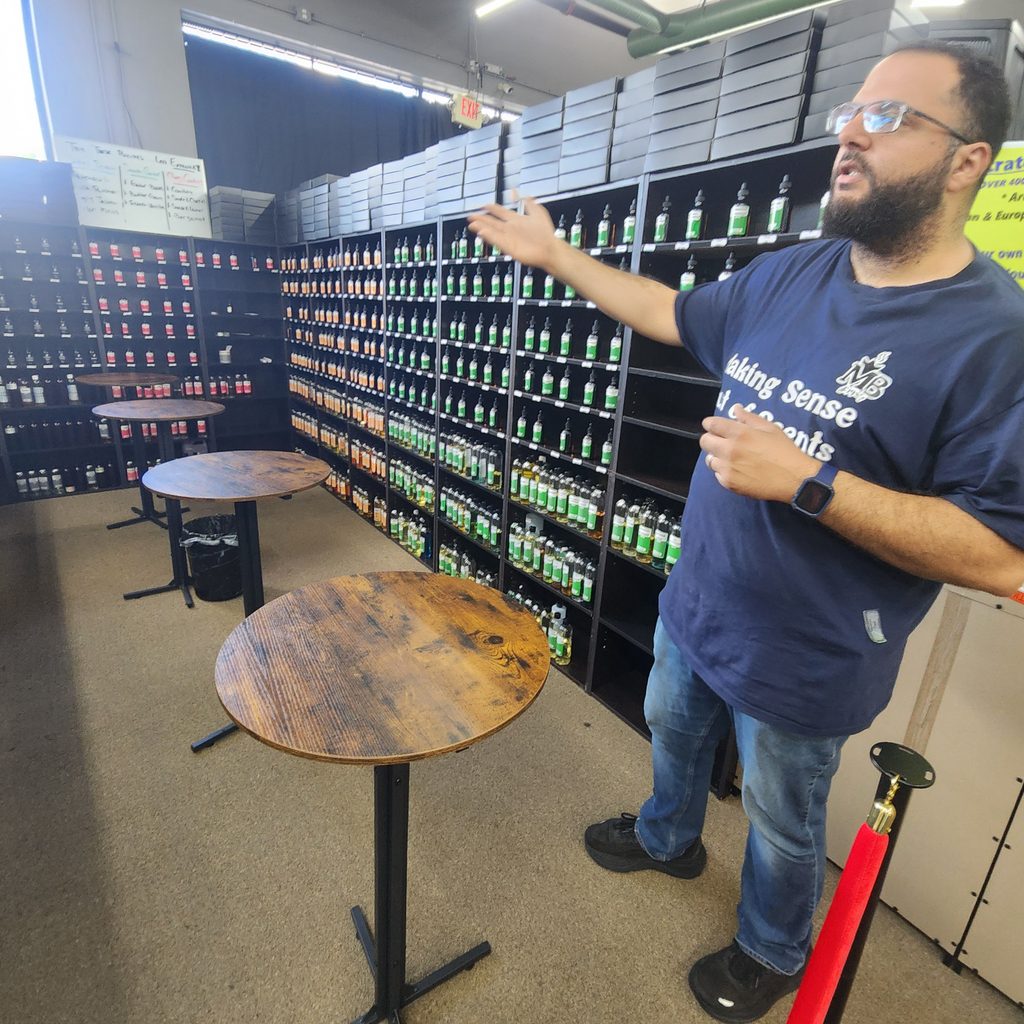
The Scent Library, Abuhamra’s room where customers can build their own fragrances, came out of watching people hesitate and disliking his part in it. He did not want to hover while someone decided; more practically, a business in which every sale passed through him personally could never be larger than his own working hours. More than 800 fragrance oils, by the store’s own count on Yelp, a formula converting drops to millilitres, and a finished bottle inside 10 minutes. Entry is $10 and comes off the price. There is one size and one price: $40, for either a 50ml bottle or a 30ml oil concentrate, whether the customer blends two oils or 17.
I realized after leaving his store that the flat rate is the model entirely. Abuhamra is not selling oil by the millilitre; he is selling the half hour customers need to create their own concoctions. It accounts for roughly half his trade and is the reason most people come.
Between 70 and 80% of his customers are not of Middle Eastern background, and most are tourists or visitors to the area who found him online before they found Wyoming Avenue. The store is listed in the Visit Detroit directory, the regional tourism body’s guide to things to do, alongside the city’s museums and attractions, which fits. Although Abuhamra would like more local business he is clear-eyed about why his format does not draw it.
“The locals are content buying their bakhoor from the same store they buy their groceries. They are not looking for an experience. Just something quick. In and out.”
The store that is a destination
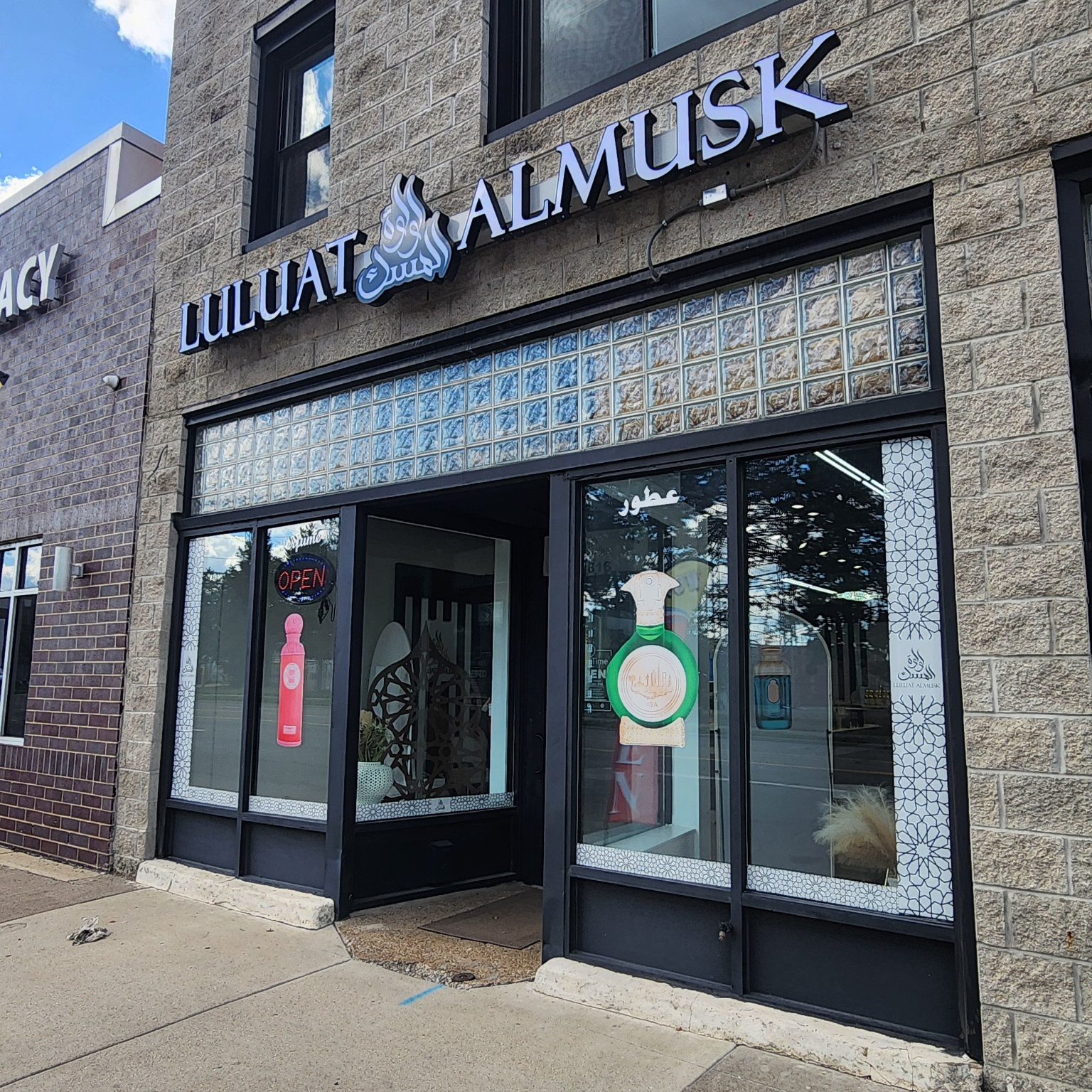
I did not know what to expect when walking into Luluat Almusk, roughly translated as Musk’s Pearl. A woman on the floor welcomed me, walked me through what was on offer and handed me the card of Jassim Zaini, the company’s CEO, who was not there at the time.
The shop would not look out of place in a Dubai mall, and I knew at once I had walked into a store selling at the luxury end of the local market. The design of the shop and what was on sale spoke to me immediately.
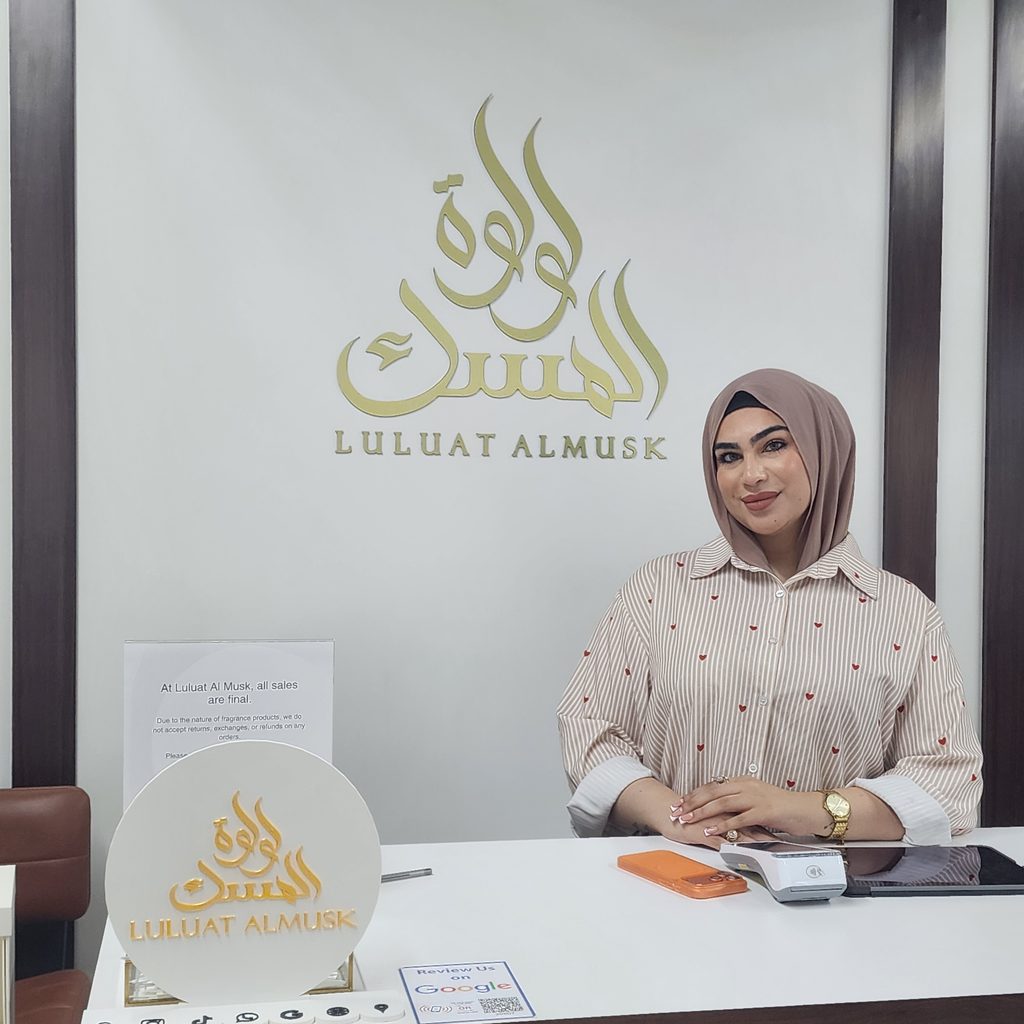
While Abuhamra is largely self-taught, Zaini has spent more than 25 years in cosmetics distribution, including fragrances, also wholesaling between Iraq and Dubai. The family firm runs a distribution hub in Iraq employing more than 100 people and manufactures products in the Emirates; a brother is his partner there. The shop on West Warren is not a boutique that grew from nothing, it is the American end of an existing and long-established supply chain.
On a late night call Zaini explained that about 70% of Luluat Almusk’s business is retail, most of it ordered online and shipped across the country, with wholesale accounts reaching as far as North Carolina, Ohio and Minnesota. While foot traffic is important it is not the engine. Dearborn is a good place to be based, but he cannot rely on local customers alone. The choice of being based in Dearborn was his own. “I choose to be based in Dearborn, the fragrance companies did not decide that for me,” he explained. The brands did not send him here; he came, and they followed.
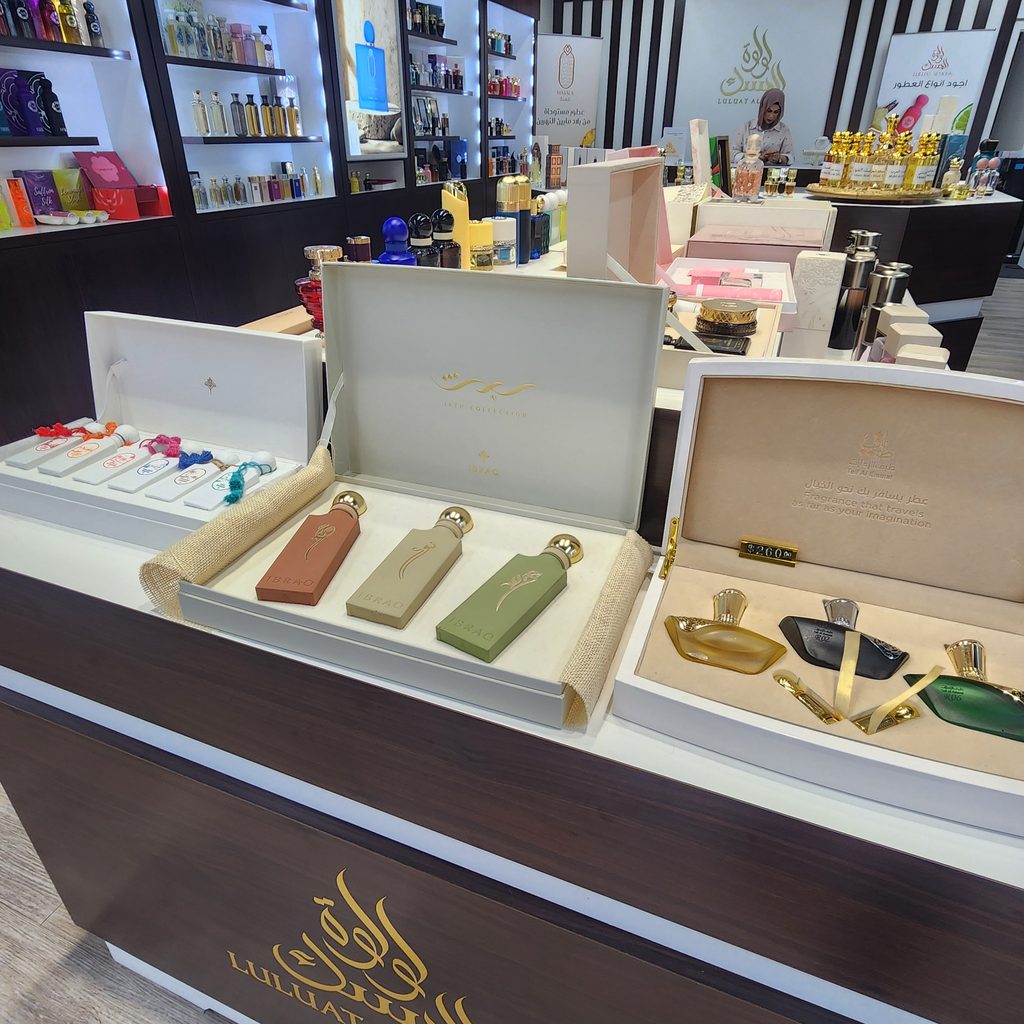
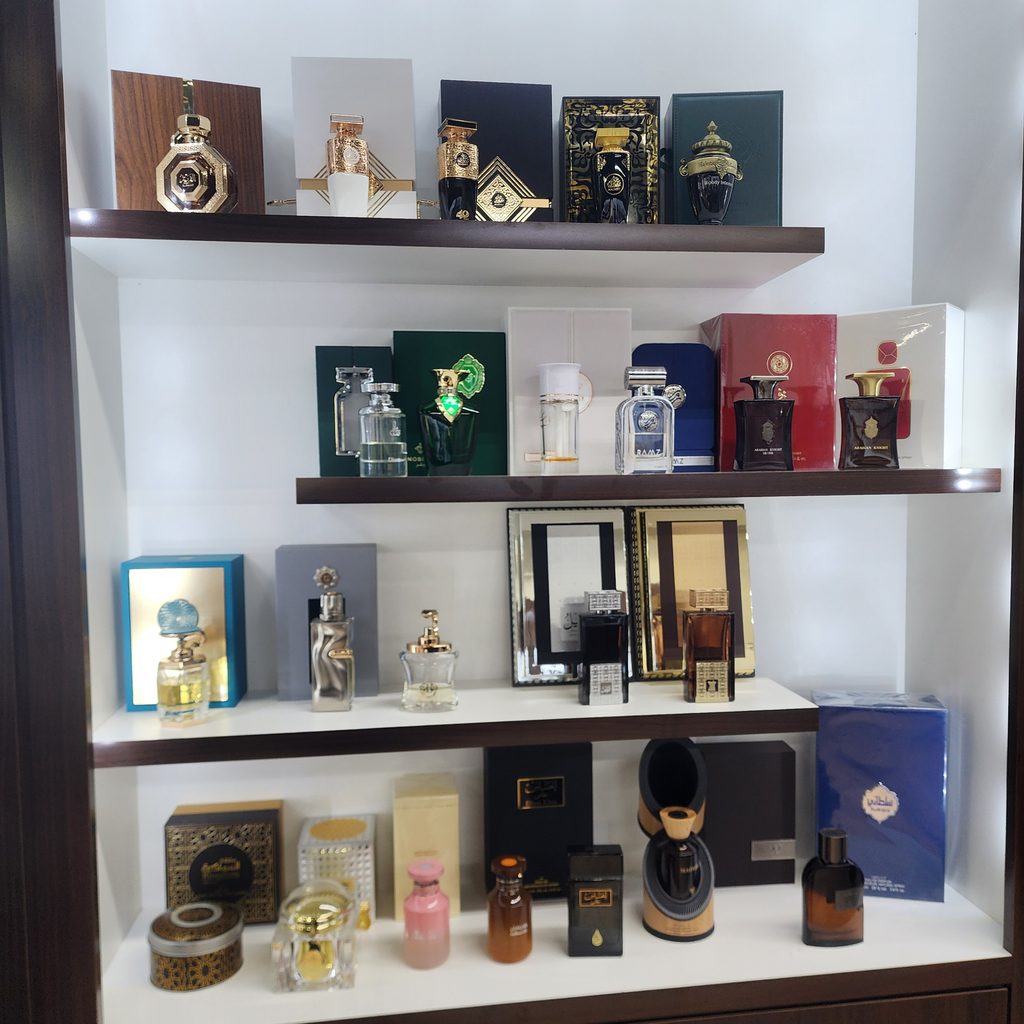
How the brands came to Zaini is a story more about patience than negotiation. He met the people behind them more than a decade ago and kept the friendships alive. He was eventually asked by them if he would sell their products, a way of doing business that would be recognizable in any souk. Today he carries many of the most prized and difficult to find Arabian brands in North America, including Taif Al Emarat, Arabian Oud, Sedra, Gissah and Dar Al Teeb.
Asked why the highest-end Arabian brands such as Amouage are absent from his shelves, he cited neither politics nor supply. “Amouage is a great brand that is very expensive, and I don’t serve customers in that bracket.” The top of the luxury market, in other words, is generally not a target in Dearborn.
Before we ended our call, Zaini said his prices were fair for the value. Discounting fragrances, he argued, is a slippery slope that can easily put a company out of business, and lowering prices only makes his own stock look cheap.
A house that I had never heard of
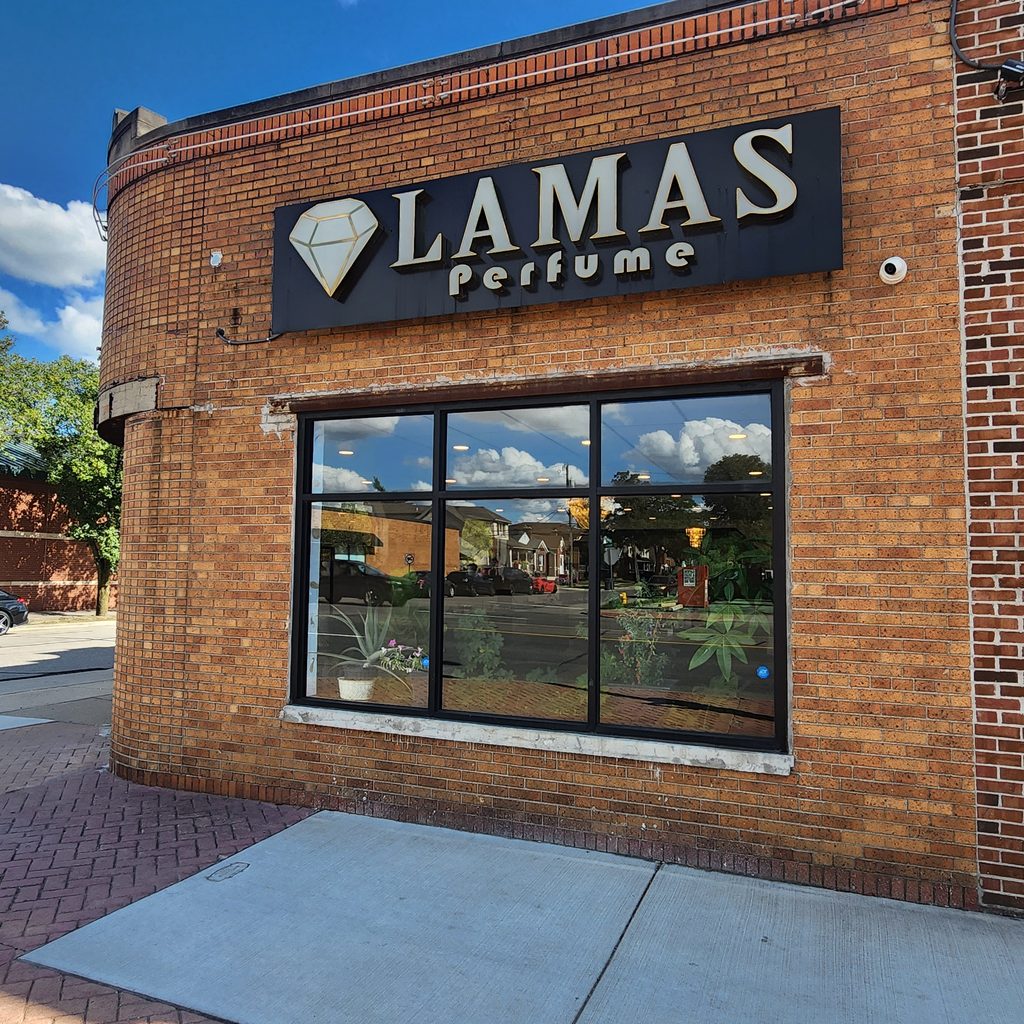
The final store I visited was Lamas Perfume, a brand I had never heard of before, which was precisely the reason I chose to enter.
Franchise owner Ramy Mohammed said his store existed because of a holiday. His family walked into a Lamas shop in Istanbul, Turkey. Everyone bought something and wore it for the rest of the trip. When he returned to Michigan he realized nobody in America carried Lamas perfumes. He wrote to the company asking if he could open a franchise and they agreed.
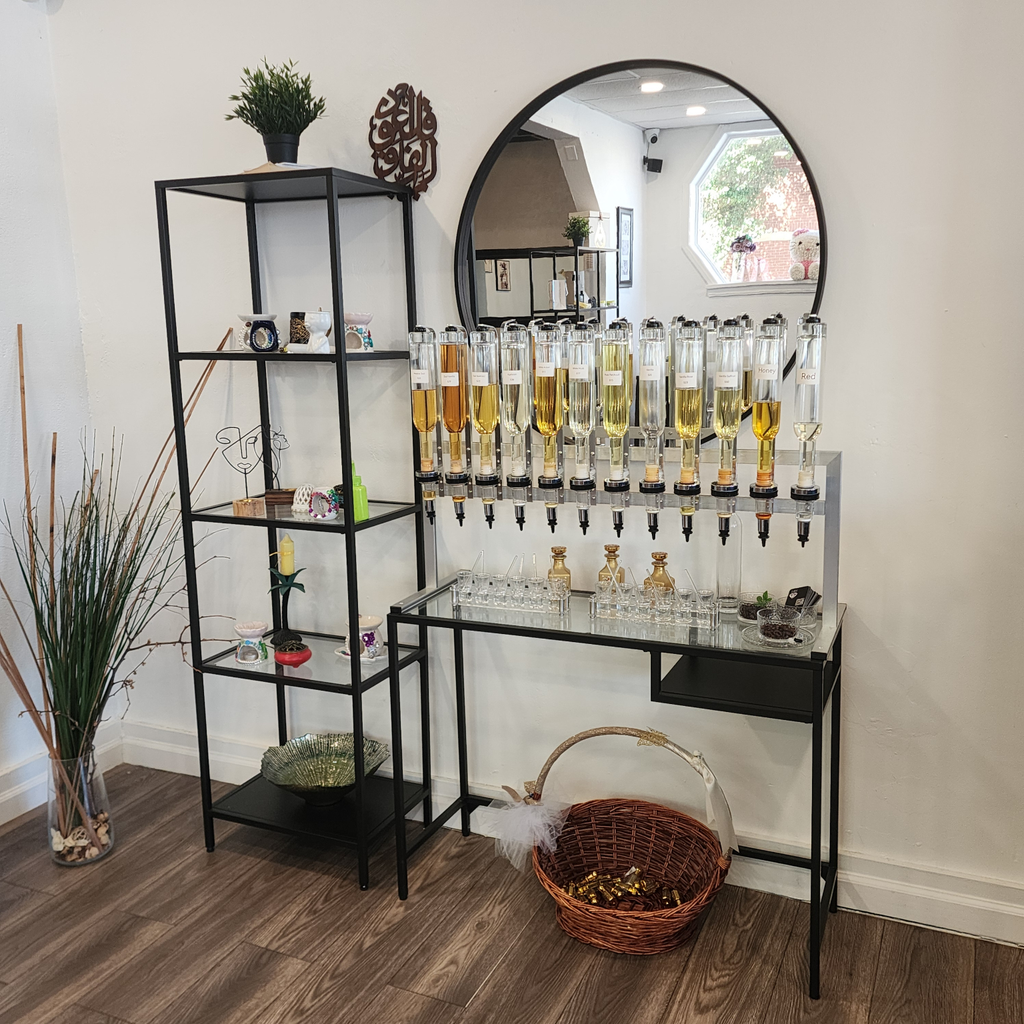
The house is not Turkish, though that is how it is usually described. By its own account Lamas was founded in Aleppo, Syria, around 1900 by Haj Abdul Ghani, working with the materials of the region. His children carried it forward and began travelling to Grasse, bringing French methodology into the Syrian house. The Istanbul stores came in 2016, where production is based.
“It’s a Syrian house, over a century old, that learned French perfumery and kept its own identity while doing it. That’s why the shelves look the way they do,” Mohammed said with a glint in his eyes. “You’ll see a Turkish cologne next to a French-style extrait next to bakhoor. It’s not three separate ideas. It’s one family that picked things up along the way.”
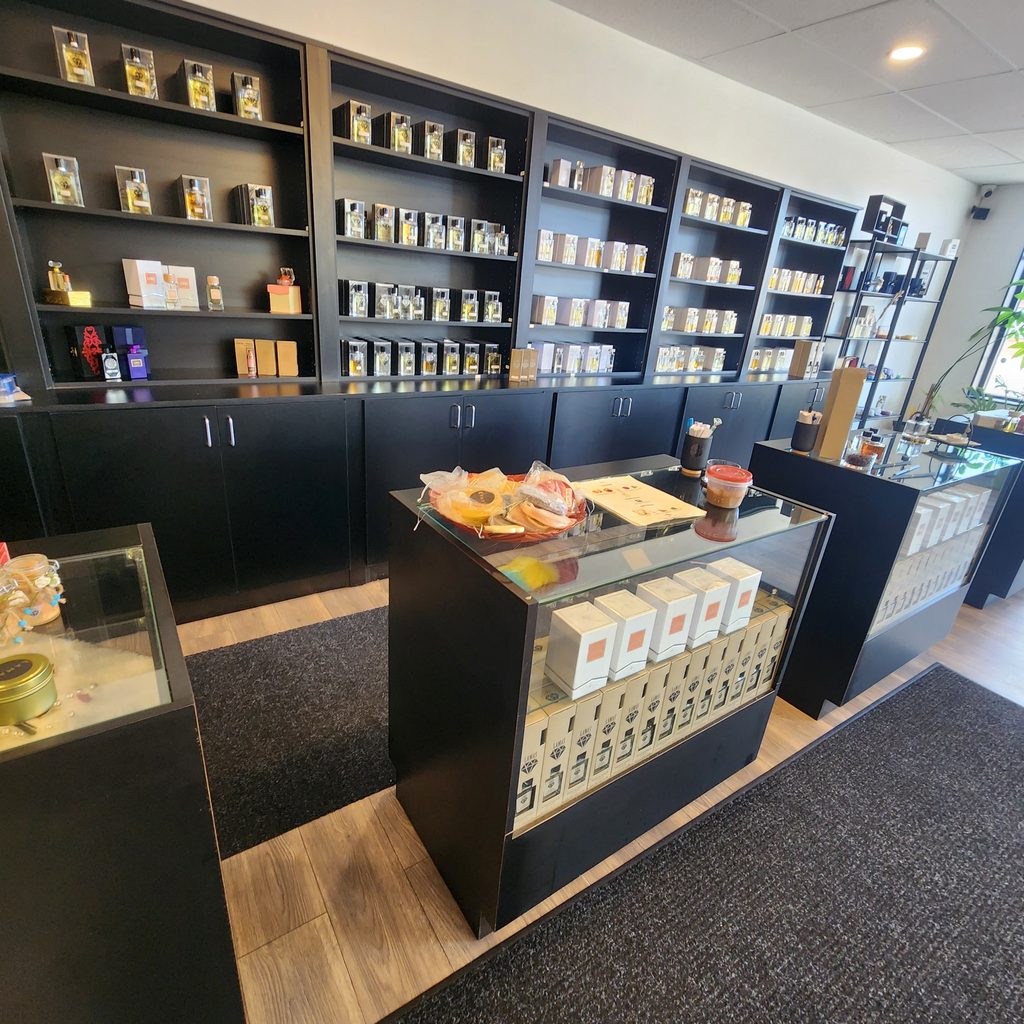
By Mohammed’s count, Lamas has nine storefronts: there are “three in Turkey, two in Palestine, and one each in Qatar, Syria, Saudi Arabia and Dearborn.”
Lamas’ pricing runs from about $10 for a soap to $110 for the signature line. Much of the market has decided that quality begins at $200, which he disagreed with. Forty dollars, he argued, should buy something a person actually wears. Such pricing brings in students, young couples and people who would rather own five great bottles than one expensive one.
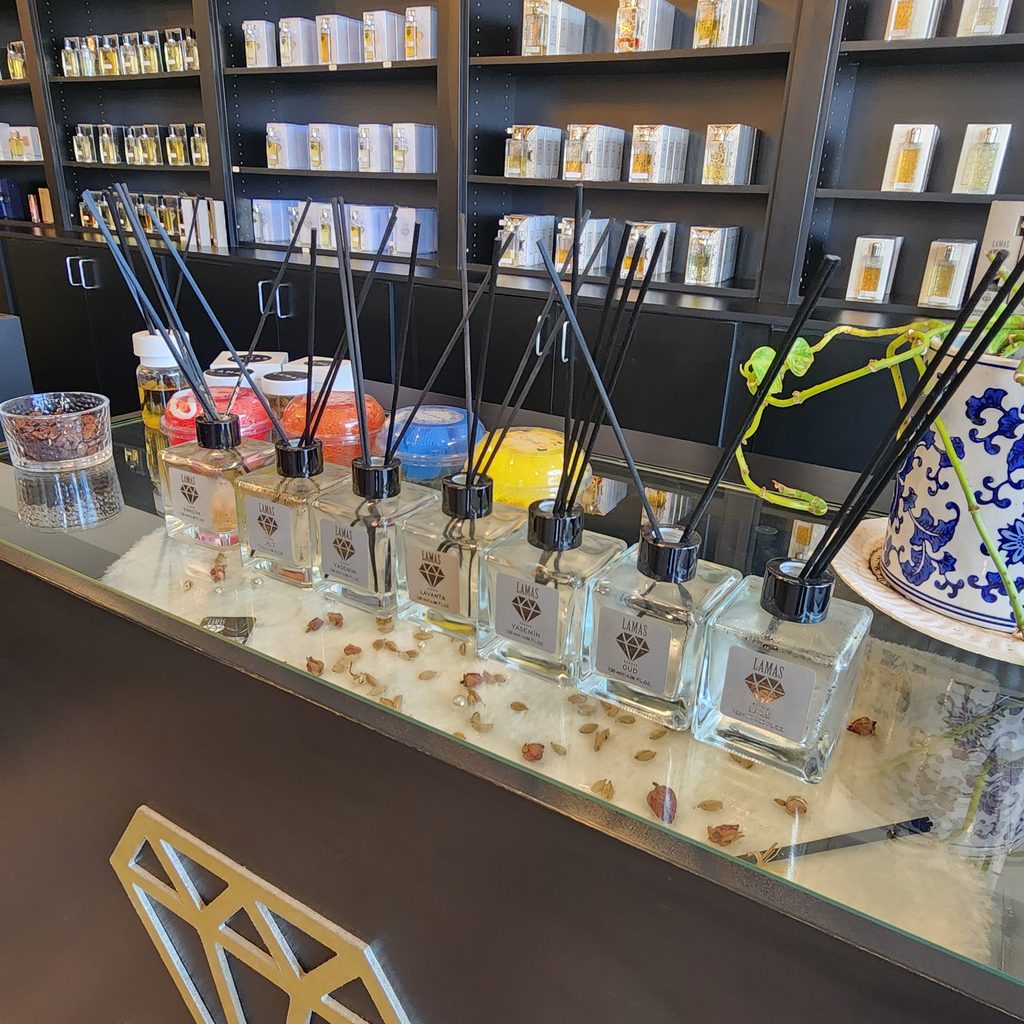
In the past few years Lamas’ customers have changed. It “used to be women in their 30s and 40s, local, who knew fragrance. Now it’s a lot of people in their 20s who found us on TikTok and walk in already knowing the bottle. That customer didn’t exist for us three years ago.” By his estimate, close to half his customers are not of Middle Eastern background, and they drive in from Ohio, Chicago, Windsor and Toronto.
Three different ways to sell fragrances
Set the three businesses side by side and they are not arranged in the order a visitor would guess. A bespoke bottle at Abuhamra’s costs $40; Mohammed’s signature line stops at $110; Zaini’s priciest Sedra is $160, in the room that looks most like Dubai. The cheapest is the one built around an experience, and the priciest sits well below the tier Amouage occupies in the department stores. What distinguishes them is not price but model.
Each describes the same trap, independently. The pandemic made a great many people into fragrance consumers and a smaller number into fragrance merchants, most of them stocking the same trending bottles, leaving one axis on which to compete.
What each of these three fragrance leaders in Dearborn found was an exit the others could not follow him through: stop selling product and sell the half hour; stop being just a shop and be the American end of an Arabian supply chain; and hold a franchise nobody else can hold.
Which leaves the question of what Dearborn itself supplies, in a trade that so plainly reaches far beyond its borders. Dearborners do not provide customer demand so much as credibility. An address in the first Arab-majority city in the US is a credential of authenticity, and it travels considerably further than only the customers who live nearby.
The concentration is real, the habits beneath it older than any of these businesses, and the reputation they produce goes far beyond Dearborn. People drive to Dearborn from Ohio and Chicago and Windsor and Toronto for what being on Warren Avenue signifies. I made the drive myself, and I will make it again.
Dearborn’s fragrance scene is not a neighbourhood trade that happens to be visible from the road. It is a growing community that built something out of its own deeply held habits, on its own ground, and discovered that the rest of the country wanted it too.
The boy who had to wait for someone to fly in from Yemen with bakhoor is now the man who sells it to people who travel to see him.
My Bakhoor & Perfumes is located at 7653 Wyoming, Dearborn, MI, 48126, USA. Luluat Almusk is located at 13816 W. Warren, Dearborn, MI, 48126, USA. Lamas Perfume is located at 15301 W. Warren, Dearborn, MI, 48126, USA.
Ali Bokhari is the Founder and Editor-in-Chief of Ali Perfumewala.